USA | South Dakota | Sioux Falls


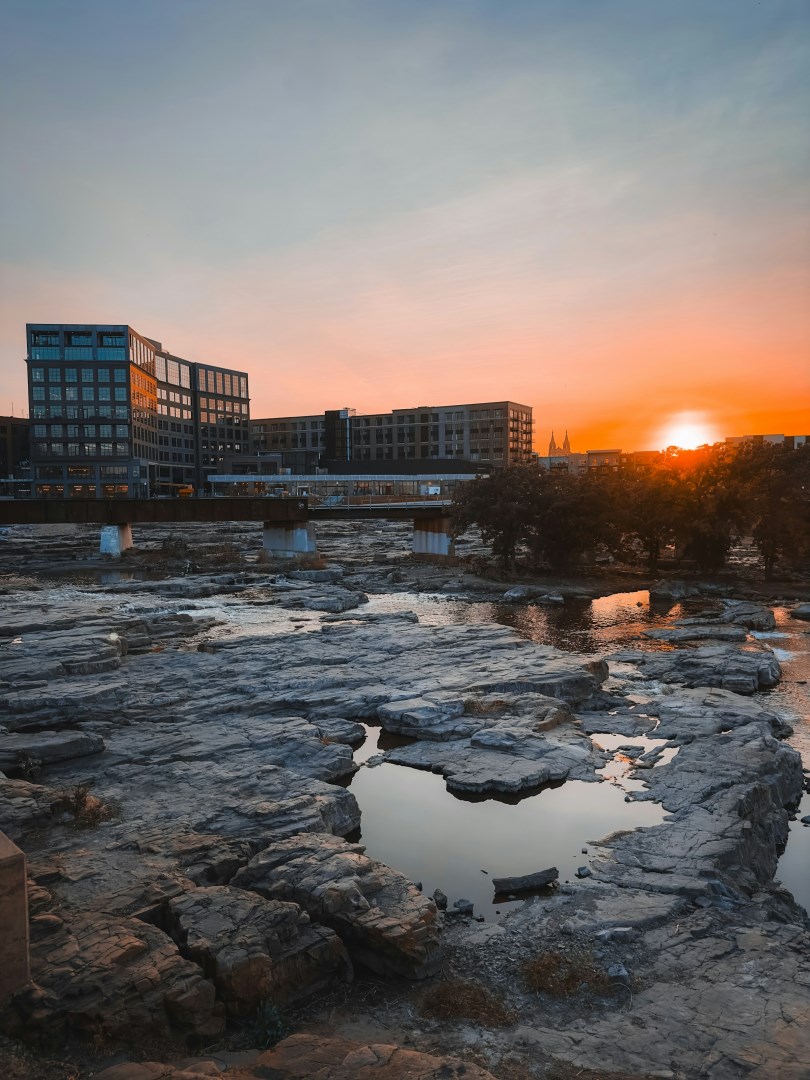


Sioux Falls is South Dakota’s largest city, located in the southeastern part of the state along the Big Sioux River. The river is central to the city’s landscape, most notably where it passes over a series of pink quartzite ledges at Falls Park. Around the urban area, the terrain opens into the broad prairie of the Great Plains, with farmland and gently rolling countryside extending beyond the city. Sioux Falls combines a substantial downtown with established neighborhoods, riverfront parks, and a growing collection of cultural and recreational institutions.
The area has long been connected to Indigenous peoples, including the Dakota, Lakota, and Nakota communities of the Great Plains. The Big Sioux River provided an important natural landmark and travel corridor, while the falls later influenced settlement and industry. The Old Courthouse Museum occupies a historic former county courthouse and interprets the region’s local history, while the Pettigrew Home and Museum preserves a historic residence associated with South Dakota’s early statehood period. The city’s cultural institutions also include the Washington Pavilion, which houses performing arts, visual arts, and science exhibits.
Falls Park is Sioux Falls’ defining landscape, with walking paths, gardens, historic structures, and overlooks around the Big Sioux River falls. The city also has an extensive park system, including the SculptureWalk area downtown and the Great Plains Zoo and Delbridge Museum. The Big Sioux River Greenway connects parks and trails through several parts of the city, providing opportunities for walking, cycling, fishing, and wildlife observation. Outside the urban area, the surrounding prairie and agricultural landscape offer a clear sense of the geographic setting that has shaped southeastern South Dakota.
Sioux Falls’ food culture reflects its location in the Great Plains, with beef, pork, grains, potatoes, and locally grown vegetables appearing frequently on menus. The city also has a growing selection of restaurants influenced by the many immigrant and refugee communities that have settled in the region. Local farmers markets provide seasonal produce, baked goods, meats, and other products from surrounding farms. A distinctive detail is the role of Sioux quartzite in the city’s built environment: the durable pink stone has been quarried locally and used in buildings, monuments, walls, and other structures throughout the region.
Other Popular Destinations in South Dakota